Pavers in San Tan Valley, AZ | AZ Outside Living
Paver Patios, Driveways, and Walkways That Hold Up in the Desert
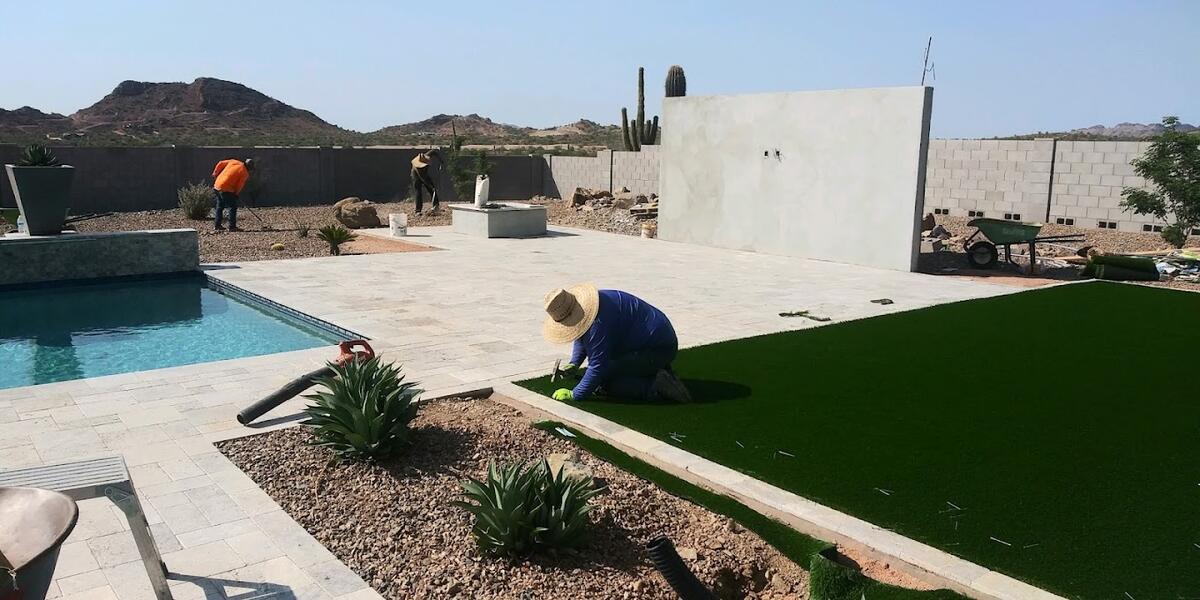
Pavers are the backbone of most Arizona backyards, and they are also the place where cheap installs fail fastest. A patio laid on a lazy base sinks, lifts, and separates within a few monsoon seasons, because the same ground movement and water that wrecks slabs goes after a poorly built paver field too. AZ Outside Living installs pavers the way they are supposed to go in, with the base and edge restraint that keep them flat and tight for the long haul. We are family owned, based in San Tan Valley, and the crew on your job is our crew, not a sub we met last week.
The base is the whole job
Anyone can set pavers on the surface. The reason ours stay put is what happens underneath. Arizona's expansive soils swell when they get wet and shrink when they dry, so the base has to be excavated to the right depth, filled with properly compacted aggregate, and screeded flat before a single paver goes down. Skip the compaction and the patio telegraphs every soft spot within a year. We also build in the right slope, usually around an eighth inch per foot, so monsoon water runs off the surface and away from your house instead of pooling in the low corner and undermining the field from below.
Patios built for how the desert is used outside
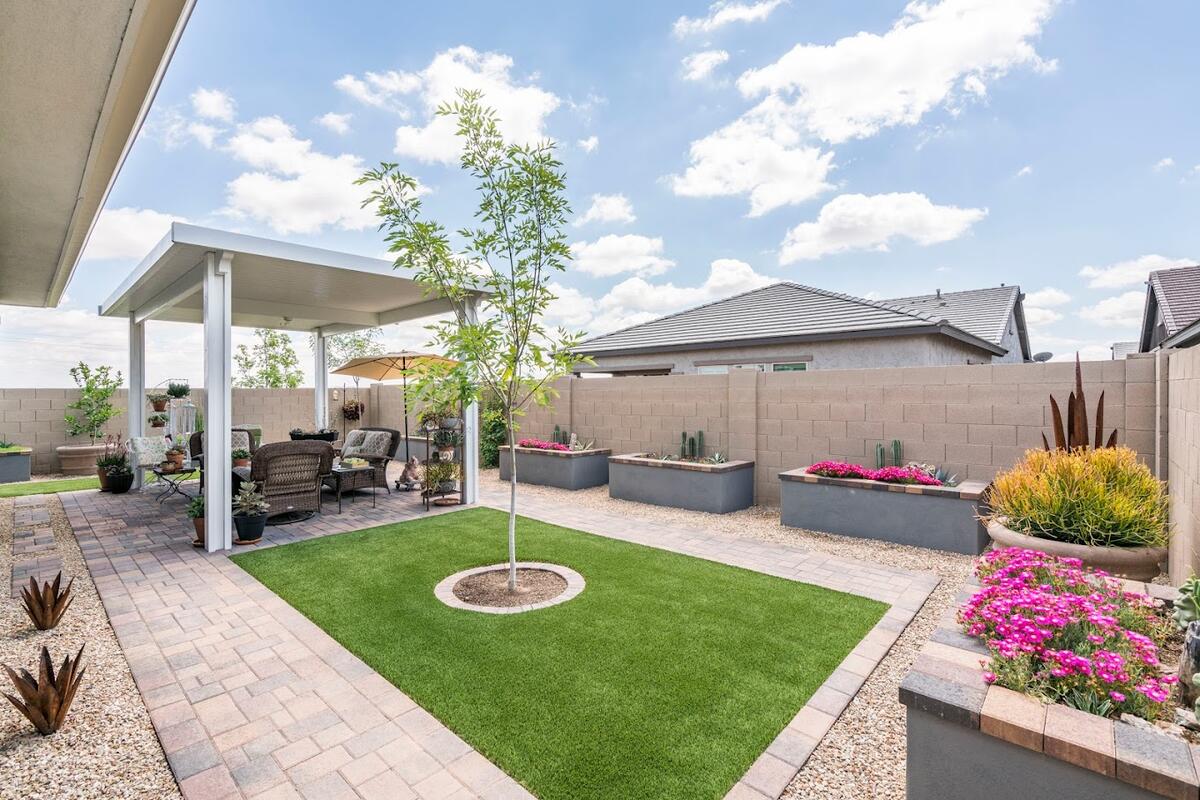
The patio is where Arizona living actually happens, from October dinners outside to summer mornings before the heat lands. We design and install paver patios sized to your furniture and your gatherings, tied into the rest of the yard so the patio, the turf, and any ramada or kitchen read as one space. Paver color and pattern matter more than people expect in full sun, lighter blends stay cooler underfoot and hide dust, and a running bond or herringbone pattern locks together more tightly than a simple grid under foot traffic.
Driveways that survive the heat and the weight
A paver driveway has to carry vehicle loads and take direct sun all day without rutting or fading. That calls for a thicker base and a heavier paver than a patio uses, plus a properly built edge so the field does not spread under the tires over time. Done right, a paver driveway outlasts a poured one and is far easier to repair, because if a section ever settles you lift those pavers, fix the base, and relay them rather than jackhammering and repouring a slab.
Walkways, pool decks, and the connective tissue
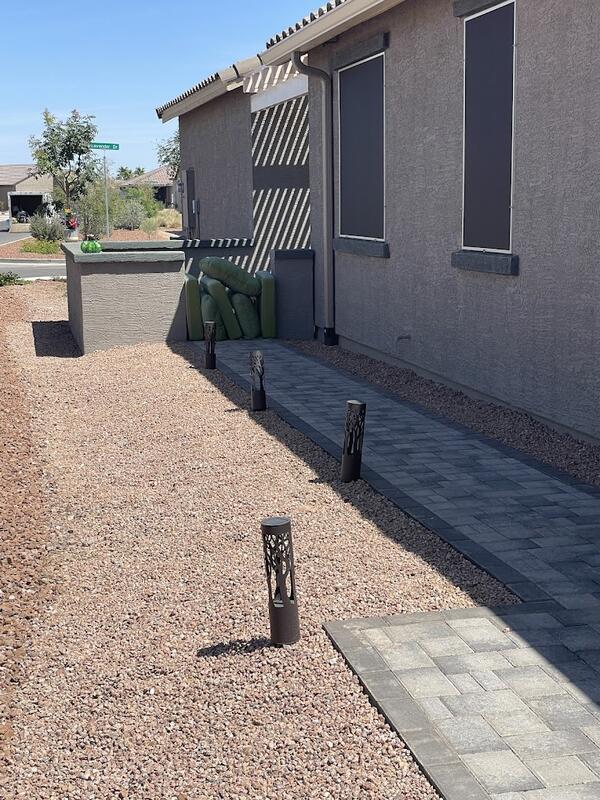
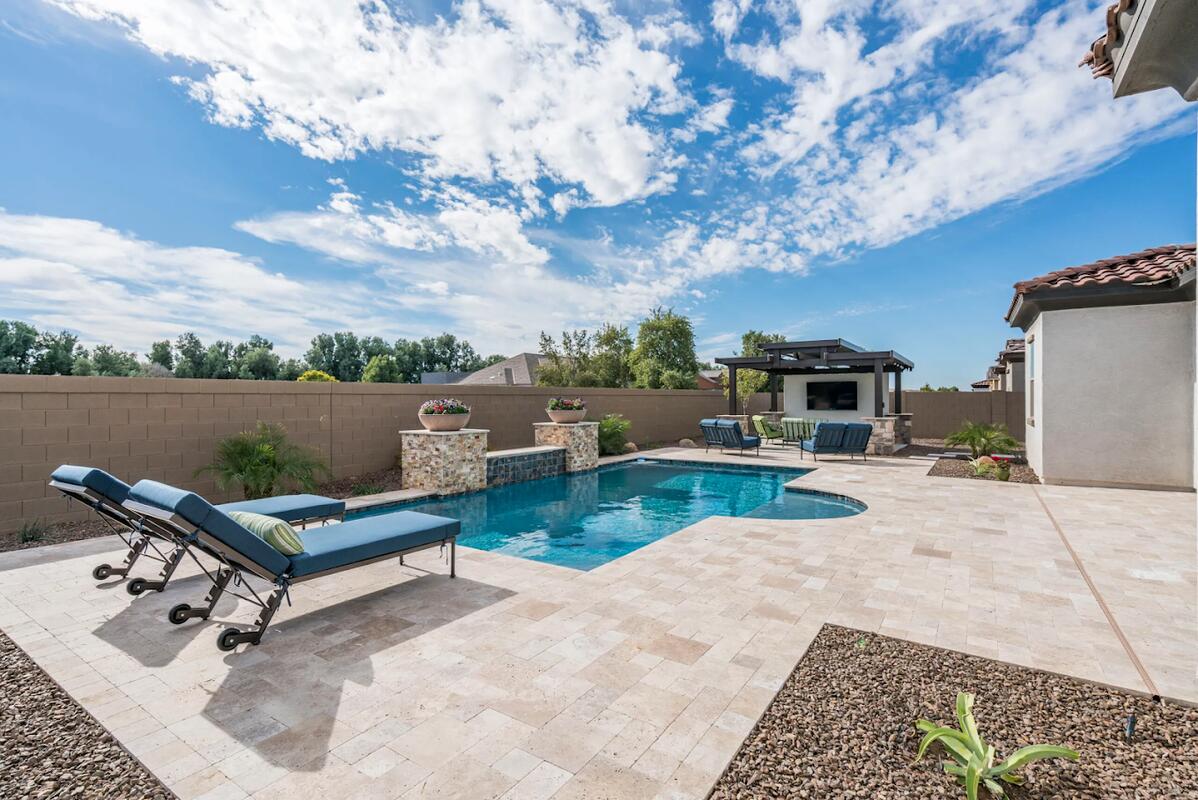
The paths that tie a yard together get walked every day and noticed constantly, so we build walkways with the same base and edge work as the patios. Around pools, pavers earn their keep because they stay cooler than concrete, give better traction wet, and can be lifted for plumbing access without destroying the deck. We match the paver selections across the patio, walkways, and pool deck so the whole yard feels designed rather than assembled.
Edge restraint and joint sand, the details that last
Two small things separate a paver job that stays tight from one that spreads into a mess. The first is edge restraint, a hidden border that keeps the outer pavers from migrating outward and opening gaps across the whole field. The second is the right joint sand, often a polymeric sand that hardens to lock the pavers together, resist weeds, and stand up to being hosed off. We install both as standard. They are invisible when the job is done, and they are the reason it still looks done in five years.
Repairs and releveling
Because pavers come up and go back down, problems are fixable instead of permanent. If an older patio has sunk near a downspout or a tree root has lifted a section, we can pull the affected area, correct the base, and relay the same pavers so the repair disappears. That is a real advantage over concrete, where the only fix for a cracked or heaved slab is to break it out and start over.
Sealing, color, and long term care
Pavers are low maintenance, not no maintenance, and a few choices at install time decide how easy they are to live with. Sealing is optional but worth considering in Arizona, a good sealer deepens the color, helps the surface shed stains and dust, and locks the joint sand down harder against monsoon runoff and the hose. Color choice matters in full sun too, lighter blends stay cooler underfoot and hide the fine dust that settles on everything here, while darker pavers show more heat and more dust. We walk you through the trade offs so the patio you pick is comfortable to stand on in July, not just nice in the showroom. Down the road, the only routine upkeep is the occasional rinse and a re sand or re seal every several years, which is a fraction of the attention a stamped concrete or stained slab demands.
Patterns, borders, and the finished look
The layout of the pavers is what separates a custom patio from a parking pad. A soldier course border frames the field and gives a clean edge against turf or planting. A herringbone or basketweave field reads as intentional and interlocks tightly under traffic. Banding in a second color can define a dining zone or a path through a larger patio. These details cost little extra at install and are most of what makes the finished space look designed, so we plan the pattern and borders with you rather than defaulting to a plain grid.
Local crew, real accountability
Call (480) 628-4745 and you reach the family that runs AZ Outside Living, not a scheduling center. With more than 30 years of combined Arizona experience on the team, we have built paver work across San Tan Valley, Queen Creek, Gilbert, Chandler, and Mesa, and we know how the soil and the monsoons in each pocket of the East Valley behave. Robert stands behind every install personally.
Project Gallery
Frequently Asked Questions
How long do pavers last in Arizona?
A properly installed paver patio or driveway lasts decades. The base and edge restraint are what determine longevity, which is exactly where we do not cut corners.
Are pavers better than concrete here?
For most yards, yes. Pavers flex with ground movement instead of cracking, stay cooler in some color blends, and can be lifted and repaired in sections instead of replaced whole.
Will weeds grow up through the joints?
We use polymeric joint sand that hardens between the pavers, which strongly limits weeds and holds the field together. Occasional spot maintenance keeps it clean.
Do you handle drainage and slope?
Yes. Correct slope and drainage are built into every install so monsoon water sheds off the surface and away from your home rather than pooling.